For foreigners planning a trip to Seoul for the first time, it is still difficult to leave out Myeongdong.
This is because it is convenient for shopping, has many facilities for tourists, and cosmetics stores and restaurants are concentrated in one place. In fact, in terms of the number of foreign tourists alone, Myeongdong remains the most prominent tourist area in Seoul.
However, if you look at the travel patterns of foreigners visiting Seoul for the second or third time recently, you can see a somewhat interesting change.
The trip does not end after buying cosmetics in Myeongdong and seeing Gyeongbokgung Palace.
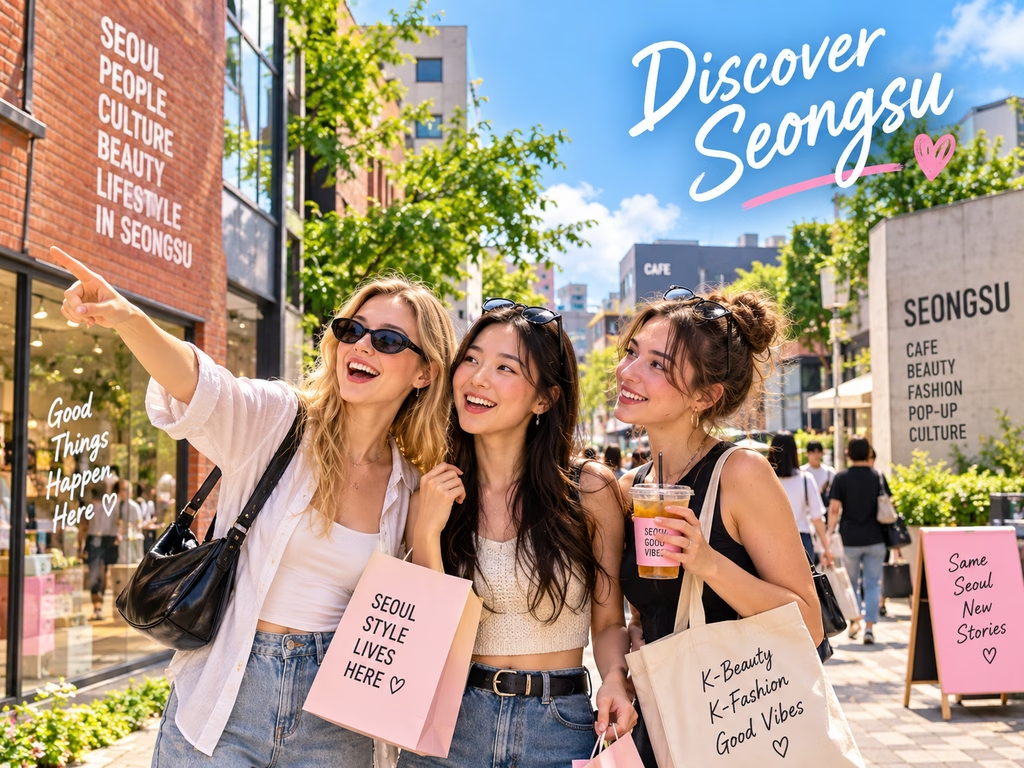
I started including visiting a newly opened pop-up store in Seongsu-dong, browsing Korean fashion brands, spending time at a cafe converted from an old factory, and even trying out K-beauty in my travel itinerary.
The Seoul Metropolitan Government also analyzed that in the first half of 2026, foreign spending is expanding from the existing centers of Myeongdong and Gangnam to areas such as Hongdae and Seongsu-dong, where visitors can experience Seoul's daily life and culture. The number of foreign visitors to Seoul in the first half of this year reached an all-time high of 8.23 million, and card spending recorded 5.6172 trillion won.
Then I become curious.
Seongsu does not have massive cultural assets like Gyeongbokgung Palace, nor does it have Seoul's representative landmark like Namsan Seoul Tower.
But why do foreigners go out of their way to visit Seongsu?
First of all, it does not mean that there are more people than in Myeongdong.
Looking only at the title, you might think that Seongsu has completely surpassed Myeongdong.
That is different from the truth.
According to data analyzing the floating population of foreigners in 2025 by the Seoul AI Foundation, Myeongdong had the highest daily average of foreign tourists at approximately 100,910.
N Seoul Tower followed with approximately 57,370 people, Samseong Station and COEX with approximately 46,813 people, Gangnam Station with approximately 41,210 people, and the Hongdae area with approximately 40,213 people.
So, you shouldn't understand it as "Myeongdong is over and now everyone is going to Seongsu."
In my opinion, it is a slightly different change.
Myeongdong remains a representative 'basic course' for foreign tourists, whereas Seongsu is closer to a new destination that people intentionally seek out to experience Seoul's latest trends and the current Korean lifestyle.
It is not so much a competition in the number of tourists, but rather the way people travel itself is changing.
Why do people flock to Seongsu even though it doesn't have any famous tourist attractions?
If you are visiting Seongsu for the first time, you might actually be flustered.
This is because a huge tourist attraction does not appear immediately just because you get off at Seongsu Station and step outside.
The first things you see are ordinary buildings and alleys, old factory buildings, companies, and small shops.
However, the atmosphere changes once you start walking a little.
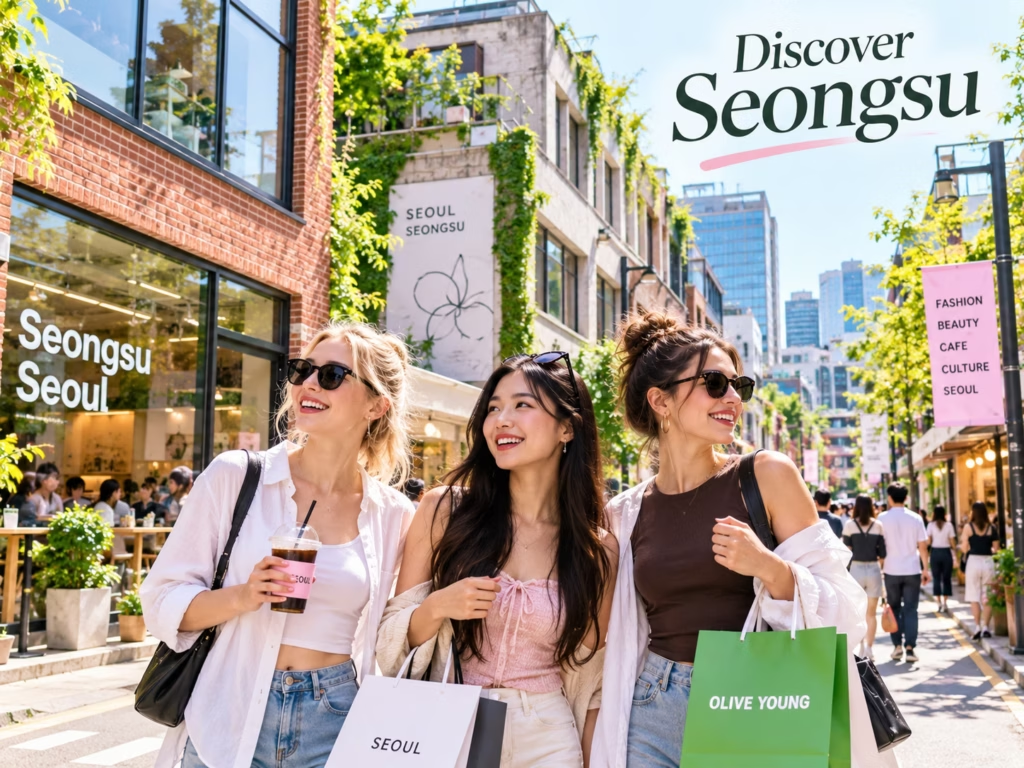
A stylish fashion store has appeared next to an old red brick building, and a space that used to be a factory has been transformed into a large café.
If you go down another alley, you will find a pop-up store that operates for only a few days or weeks, and next to it, you can try out new cosmetics firsthand.
The official Seoul tourism guide also introduced Seongsu in August 2026, describing its characteristics as "a neighborhood where what you discover is more important than famous landmarks."
It means that instead of erasing the traces of the area where the factories and handmade shoe workshops were located, the buildings and atmosphere are being repurposed into spaces for cafes, fashion, beauty, exhibitions, and design.
I believe this is precisely the biggest charm of Seongsu.
It is not “I go to Seongsu to see this,”
“What new things might have opened in Seongsu today?”
It is a neighborhood that makes you expect that.
Walking through Seongsu with knowledge of its history makes the neighborhood look different.
Nowadays, many people know Seongsu as a neighborhood of cafes and pop-up stores.
However, Seongsu was originally a region with strong traces of factories and manufacturing.
It was particularly famous for its handmade shoe industry.
The alleys where old factories, warehouses, and handmade shoe workshops were located have become an important backdrop for the current atmosphere of Seongsu.
Yeonmujang-gil is also a place that clearly shows this kind of scenery.
Seoul's official tourism information describes Yeonmujang-gil as a cultural street where the industrial traces of a former shoe factory blend with a modern sensibility. Old red brick warehouses have been transformed into cafes, galleries, fashion shops, and pop-up stores.
So, Seongsu has a different feel from tourist complexes that were made pretty from the start.
Instead of tearing down all the old buildings and erecting new ones, a new culture was introduced while leaving traces of the past intact.
In my opinion, this contrast can be quite interesting to foreigners as well.
This is because to travelers who have only seen Seoul's skyscrapers, these alleys can look like a completely different Seoul.
A neighborhood that is different yesterday and today because of the pop-up store
Seongsu definitely has something that sets it apart from other tourist areas.
This is a pop-up store.
A pop-up store refers to a temporary store or experience space that is open for only a limited period.
In Seongsu, pop-up stores are held in a truly diverse range of fields, including cosmetics, fashion, food, characters, entertainment content, automobiles, and games.
The problem is that the change is very fast.
The store that was there a month ago might be gone now, and a completely different brand could move into its place.
So it is difficult to say that you have seen all of Seongsu just by visiting once.
The official Seoul tourism guide also assessed that if you revisit Seongsu, you are highly likely to discover a different side from before, as new pop-ups and shops continue to appear.
This is where the psychology of foreign travelers comes into play.
Gyeongbokgung Palace is Gyeongbokgung Palace even if I visit again on my next trip.
However, it is highly likely that Seongsu will see something different on his next trip.
I believe this scarcity—the feeling that 'if not now, you might not be able to see it'—is a key reason why people keep seeking out Seongsu.
Shopping is no longer just about buying things.
To understand Seongsu, you also need to look at recent shopping trends in Korea.
These days, stores in Seongsu rarely stop at simply displaying products on shelves and selling them.
It allows you to test products firsthand, take photos, find products that suit you, or experience the space created by the brand itself.
One of the fields where these changes are most noticeable is K-Beauty.
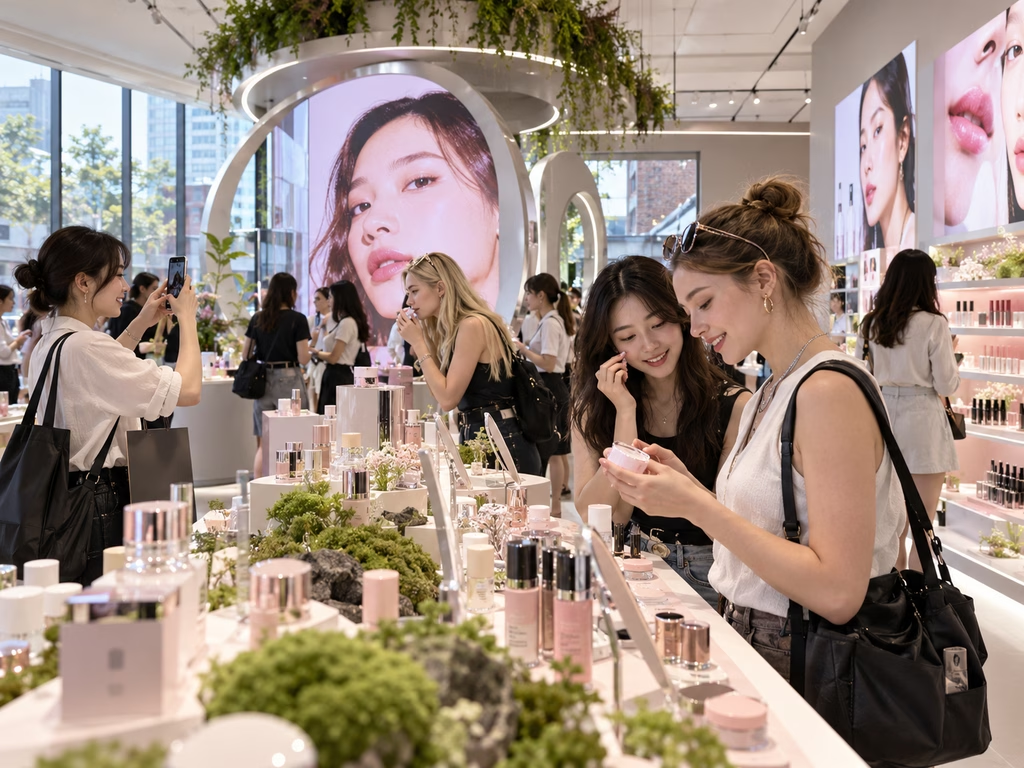
Unlike regular stores, Olive Young N Seongsu offers various experiential programs such as skin diagnosis, makeup, and personal color analysis. During on-site coverage in June 2026, foreign tourists waited starting an hour before opening on a weekday, and competition was fierce, with some free trial reservations closing within 20 minutes of opening.
The important thing here is that it is not only people who came to buy cosmetics who stand in line.
The point is that people are coming to Korea 'to experience beauty firsthand.'
The cosmetics store has transformed into a travel experience space.
In Seongsu, there are also K-beauty experiential spaces like Amore Seongsu.
It doesn't stop at simply purchasing products; you can personally test various items and explore colors and products that suit your taste.
In a recent post by an official Seoul tourism guide who personally experienced Seongsu, the space was described not merely as a cosmetics store, but as a place to directly test and discover Korean beauty. It is completely different from ordering.
Online, I search for and buy products I already know.
In Seongsu, even if you don't know the product, you can just go in and experience it.
And in travel memories, the experience of "trying it out firsthand in Korea" often lingers longer than the fact that you bought something.
Why Seongsu is fun even for people who like it
Seongsu is difficult to explain solely by K-beauty.
It is also a very interesting area for travelers who like Korean fashion.
As Korean fashion platforms that grew online, such as Musinsa Megastore Seongsu, expand into large-scale offline spaces, the number of places where you can directly compare Korean and global brands in one place has also increased.
The store spans approximately 6,600 square meters and was designed to combine fashion, beauty, content, and spatial experiences.
This also clearly demonstrates the characteristics of holy water.
I go to look at a cafe, look at clothes, try out cosmetics while looking at clothes, walk down the alley again, and enter a pop-up store.
The purpose of the trip keeps changing.
In Seongsu, it actually suits the style of walking around and entering places that catch your eye better than sticking to a travel itinerary.
Why are old warehouses attractive to foreigners?
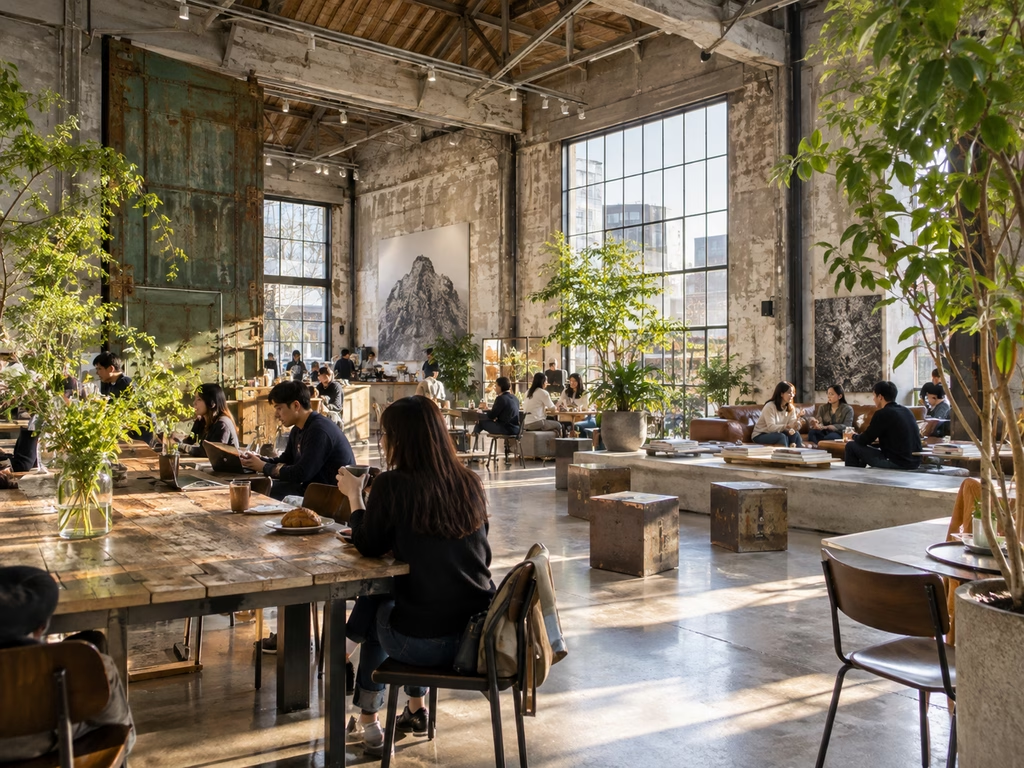
One of the iconic features of Seongsu is the space that utilizes old factories and warehouses as they were.
Places like the Daelim Warehouse Gallery in Seongsu-dong are one of the representative spaces that show the process of Seongsu transforming into its current image.
By repurposing the old bricks, high ceilings, and factory atmosphere without completely erasing them, and repurposing the space into a cafe and cultural area, they created the unique atmosphere of Seongsu.
For Koreans, 'cafes converted from old factories' may already be familiar.
However, for foreigners seeing Seoul for the first time, it can be interesting that the ultra-modern Gangnam and the industrial Seongsu coexist in the same city.
I think Seongsu is not just a region that shows only pretty things, but a neighborhood that shows how the city of Seoul is changing.
If you group the major spaces in Seongsu, it feels like this.
If it connects to Seoul Forest, the atmosphere of the trip changes completely.
It is a shame to view Seongsu merely as a shopping area.
After looking around Seongsu Station and Yeonmujang-gil, the atmosphere changes significantly when you move towards Seoul Forest.
This is because walking through an alley with many buildings and shops leads to a wide green space.
In 2026, as the Seoul International Garden Expo expanded to the Seoul Forest and Seongsu areas, the tourism effect in this region became even greater.
According to an analysis by the Seoul Metropolitan Government, sales in commercial areas near Seoul Forest and Seongsu increased by 31.5% and the resident population increased by 20.4% during the event period.
In particular, among short-term foreign visitors for tourism purposes, the proportion of those who stayed for 1 to 2 hours reached 34.3%.
This can be interpreted to mean that foreigners are not just coming to Seongsu to take a few photos and leave immediately, but are actually spending time in the surrounding area.
If you imagine a day in the life of a traveler, you can understand why Seongsu is popular.
Let me give you an example.
Let's assume a foreign traveler arrived at Seongsu Station around 11 a.m.
There is only one designated tourist attraction.
However, as soon as I came out of the station, I saw a new pop-up store and went in.
I also received unexpected cosmetic samples and took photos.
As I came outside, I saw a Korean fashion brand store.
An hour passes while I look at the clothes.
After lunch, I enter a cafe converted from an old factory.
While drinking coffee there, I discovered on social media that there is a new beauty experience space nearby.
I walk again.
I take a walk to Seoul Forest around the time the sun starts to set a little.
We originally planned to visit only one place, but before we knew it, half a day had passed.
This is not a fabricated story based on actual personal experiences, but rather an example of reconstructing the current spatial structure of Seongsu into a traveler's day.
And I think this most easily demonstrates the power of holy water.
It becomes a trip where you explore the entire neighborhood, rather than a trip to see just one destination.
Saying it's a good place to take photos isn't enough to describe it.
There is also talk that Seongsu is a neighborhood that became popular because of social media.
That is not wrong.
In fact, there are many great places to take photos due to the unique building exteriors, pop-up stores, cafe interiors, and brand shops.
However, I believe that if it had been a place solely for taking photos, it would have been difficult for its popularity to last as long as it has now.
There are many things you can do yourself in Seongsu.
You can eat, drink, shop, experience products, explore new spaces, and walk to Seoul Forest.
It is important to note that the act of taking photos is not the sole purpose, but rather one of many experiences.
Signs that Seoul tourism is changing in 2026
The popularity of Seongsu is also linked to changes in Seoul tourism as a whole.
In 2026, Seoul City is setting 'travel enjoyed like everyday life' as an important direction in its tourism policy.
It is a way of traveling that moves away from the approach of quickly touring a few famous tourist attractions and instead enjoys the lifestyle of Seoul residents as they eat, shop, and relax.
In data released by the Seoul Metropolitan Government in August 2026, a travel style involving experiencing K-fashion and K-beauty at pop-up stores in Seongsu-dong, as well as traditional markets, vintage shops, and even urban mountains, was described as a new way for the global younger generation to travel in Seoul.
In my view, this is precisely the area that BuzzKorea should focus on going forward.
It is not just about introducing Korea as featured on the first page of the tourism board's brochure, but showing where Korean people are currently going, what they are buying, and what places they find interesting.
Where should I start looking around if I visit Seongsu for the first time?
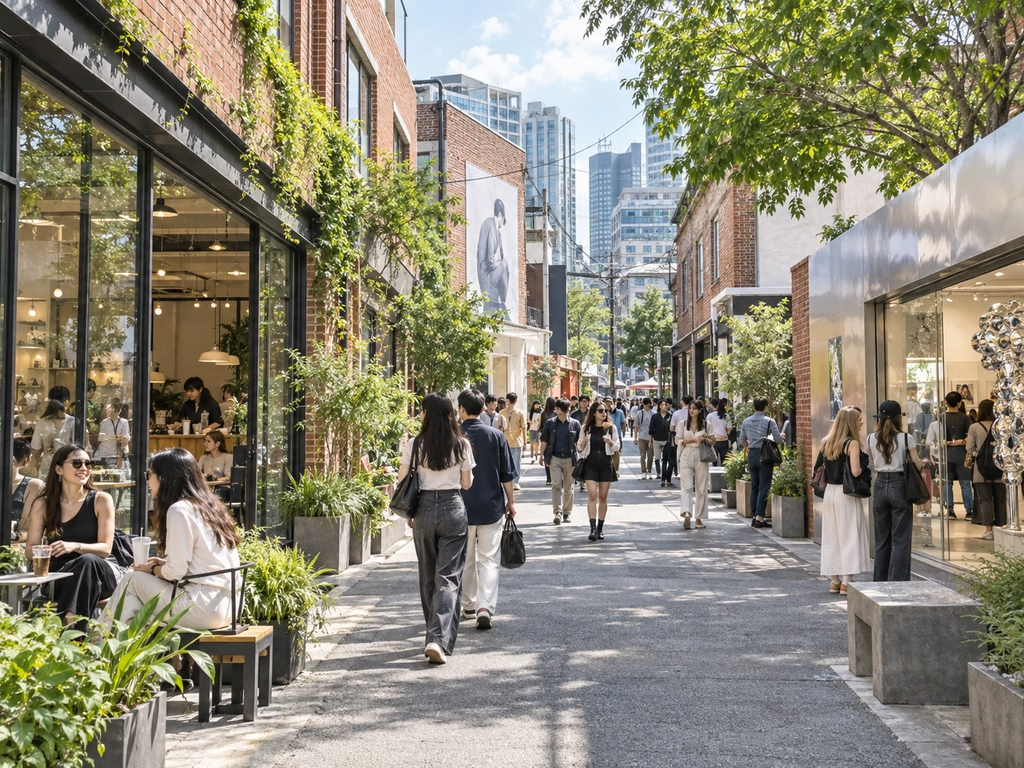
In Seongsu, rather than just visiting one spot, it is recommended to take a leisurely walk along Yeonmujang-gil from Seongsu Station.
Since pop-up stores operate for a short period, it is advisable to check what events are currently taking place before visiting, and popular experience spaces may require reservations or on-site waiting.
It can get quite crowded on weekend afternoons.
If you want to take photos slowly or browse the store at your leisure, it is better to choose a weekday morning or a relatively early time.
And if you plan to visit Seoul Forest as well, I would like to recommend comfortable shoes.
Even if it looks close on the map, you will end up walking much more than expected as you wander through the alleys and browse various shops.
The real reason foreigners like Seongsu lies in 'Korea's present'.
If you go to Myeongdong, it is easy to feel like you are on a trip to Korea.
If you go to Gyeongbokgung Palace, you can encounter Korean history.
Seongsu is a little different.
What you encounter in Seongsu is akin to 'what is trending in Korea right now.'
Cosmetics currently popular in Korea.
Fashion that young people are interested in right now.
A pop-up store available only this month.
A newly opened cafe.
A space utilizing an old factory.
And actual Seoul residents are walking together in between.
So, Seongsu doesn't feel like a tourist destination made for foreigners, yet it offers plenty of things for tourists to enjoy.
I think this is Seongsu's biggest competitive advantage.
There is no need to choose between Myeongdong and Seongsu.
If it is your first time traveling to Korea, Myeongdong is still worth visiting.
It clearly has the advantage of being convenient for shopping and easy for tourists to use.
However, if you only see Myeongdong and return, you might end up seeing only one side of present-day Seoul.
If you experienced the Seoul familiar to tourists in Myeongdong, in Seongsu you can experience a Seoul that is closer to everyday life and a rapidly changing Seoul.
The two places are not competing tourist destinations, but rather closer to travel destinations with completely different characteristics.
If you are a traveler visiting Korea for the first time, Myeongdong might be comfortable.
However, if this is your second trip to Seoul, I would recommend including a neighborhood like Seongsu in your itinerary.
This is because it allows you to take a step forward from a 'trip to see famous things' to a 'trip to experience Korea as it is.'
Ultimately, what is Seongsu a place to go to see?
This is the most difficult question when explaining holy water.
“What is the must-see in Seongsu?”
Actually, it is difficult to choose just one.
And that might be the correct answer.
Seongsu is not a place you visit to see a single landmark, but rather a place where you constantly discover new things throughout the entire neighborhood.
What you saw today might be gone on your next trip.
Instead, it is highly likely that a new space has been created in that place.
So, Seongsu is not a neighborhood you visit just once and that's it.
It makes you wonder, "What has opened in Seongsu this time?" when you visit Korea again.
How much more new must a neighborhood that is constantly changing, even for Koreans, look to a foreigner?
If Myeongdong has long been the representative face of Seoul tourism, Seongsu is closer to the face showing the direction in which Seoul is currently moving.
And it seems that this is precisely why the number of foreign visitors to Seongsu continues to grow.