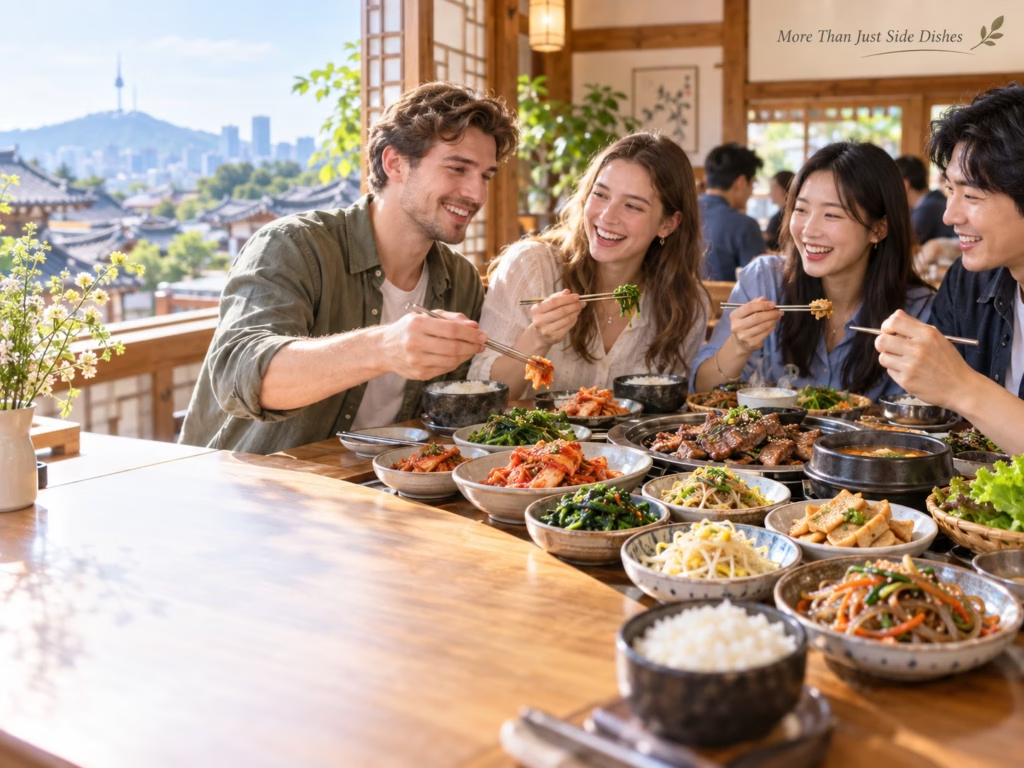
There is a moment when a foreigner entering a Korean restaurant for the first time gets a little flustered after ordering a dish.
It is the moment when small plates start being placed on the table one by one, even though the ordered food hasn't even arrived yet.
Kimchi is served, bean sprouts, and stir-fried fish cakes, and seasoned vegetables or pickles are placed on the table.
If it is a meat restaurant, lettuce, perilla leaves, garlic, ssamjang, and seasoned green onions are also served together.
From a foreigner's perspective, this thought may naturally come to mind.
Did I order this too?
Do I have to pay extra?
However, Koreans naturally pick up chopsticks without any particular explanation.
And when the side dishes run out, I say something to the staff.
Please give me some more kimchi.
Kimchi comes out again a little later.
In most cases, there is no additional calculation.
For those visiting a Korean restaurant for the first time, this is one of the most difficult aspects of Korean food culture to understand.
Why are multiple plates of food I didn't order served, and why do they give me more after I finish them?
Let’s take a look at the ‘Korean side dish culture’ through the eyes of a traveler, a culture that is so taken for granted in Korea that there have been few opportunities to explain it in detail.
Why are the side dishes coming out first when I didn't order them?
To understand Korean meals, it is helpful to first understand the concept of a 'hansang'.
In traditional Korean meals, the custom of serving rice, soup, kimchi, and various side dishes together on one table has long been maintained, rather than eating with just a bowl of rice.
The Korea Tourism Organization's guide to Korean food also describes the basic form of a Korean meal as rice, soup or stew, a main dish, and various side dishes served together.
Serving various dishes on a single table like this is called 'Hansangcharim'.
The food eaten here in small portions along with rice is called 'banchan'.
In English, it is usually written as Banchan or explained as Side Dishes.
However, Western-style side dishes and Korean banchan feel a little different.
Rather than a simple side dish that comes with the main course, like a potato accompanying a steak, it is a meal composition where you choose which side dish to eat with every spoonful of rice.
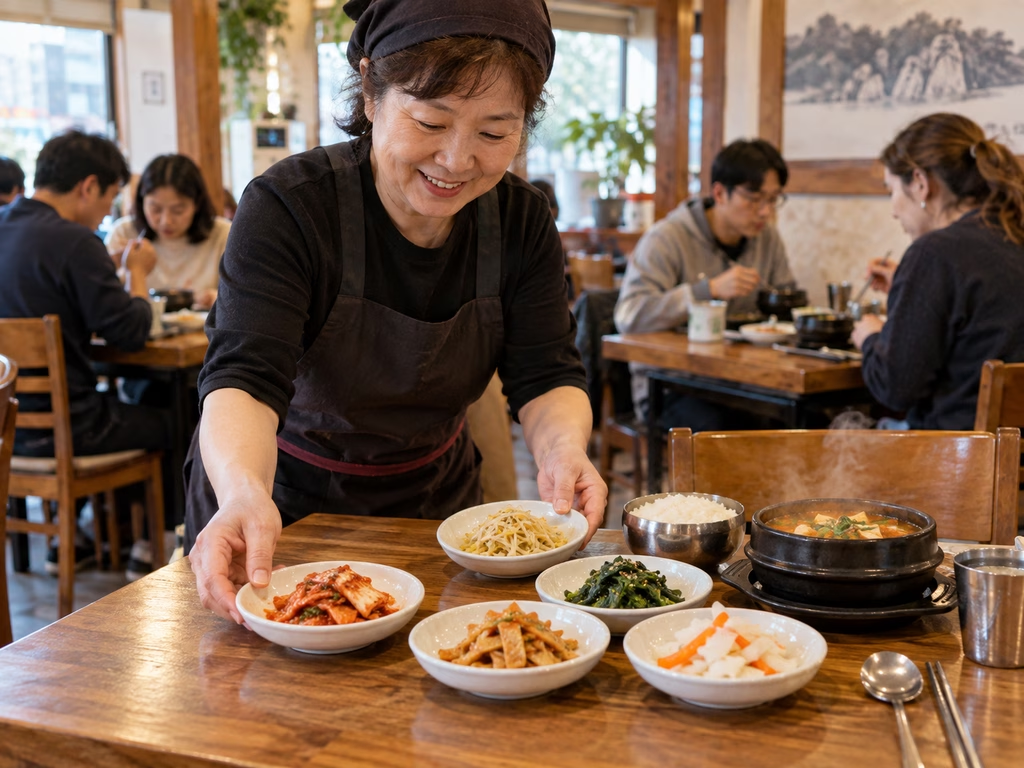
Today, I eat kimchi and rice, on the next spoonful I eat stir-fried anchovies, and after that, I put some seasoned vegetables on top.
Even when eating the same bowl of rice, the taste keeps changing depending on the combination of side dishes.
In my opinion, the most interesting part of Korean side dish culture is right here.
Instead of eating a single dish from start to finish, the flavors keep changing even within a single meal.
Kimchi is not the only side dish.
When people abroad think of Korean side dishes, they think of kimchi first.
Of course, kimchi is a very important side dish on the Korean dinner table.
However, in actual Korean restaurants, a wide variety of side dishes are served in addition to kimchi.
There may be seasoned greens such as bean sprouts or spinach, and stir-fried anchovies or stir-fried fish cakes may also be served.
Braised dishes made with soy sauce seasoning, such as braised potatoes or braised tofu, are also common.
There are sour or spicy side dishes like seasoned cucumbers or raw radish salad, as well as side dishes like pickled vegetables that are stored for a long time.
Depending on the restaurant, they may also serve side dishes that require a bit more effort, such as rolled omelets, steamed eggs, japchae, or jeon.
Therefore, the atmosphere of Korean side dish culture varies significantly from restaurant to restaurant.
Even if you order the same menu, the food served on the table varies depending on which restaurant you go to.
Some restaurants serve only three simple side dishes, while some traditional Korean restaurants or set-menu restaurants serve enough side dishes to fill the table.
This difference itself is one of the joys of visiting Korean restaurants.
If you go to a Baekban restaurant, you can truly experience Korean side dish culture.
If you want to experience Korean side dish culture in the easiest way, trying Baekban is a good option.
Literally speaking, Baekban means 'white rice'.
However, in actual restaurants, the term "baekban" usually refers to a meal consisting of rice, soup or stew, and various side dishes.
The Korea Tourism Organization describes a typical home-style Baekban as consisting of 3 to 8 side dishes, such as grilled fish, stir-fried meat, and seasoned vegetables, along with rice and soup or stew.
If you go to a restaurant that serves a proper set meal, the number of side dishes can be much higher.
Foreigners seeing a table piled high with plates of side dishes for the first time might think, "Did we order all of this?"
However, that itself is a menu.
To Koreans, baekban is closer to a familiar form of home cooking than a fancy special meal.
It is a method of eating a balanced diet of small portions of rice, soup, kimchi, seasoned vegetables, meat, or fish.
Personally, I think that for foreigners to understand Korean food, visiting a local baekban restaurant at least once is a pretty good experience, rather than just trying famous dishes like bibimbap or bulgogi.
This is because it makes it much easier to sense what kind of meals Korean people actually find familiar.
But are all the side dishes really free?
There is a common misconception here.
In Korea, all side dishes are free.
It sounds correct in broad terms, but it needs to be explained a bit more precisely.
In typical Korean restaurants, the side dishes provided as a standard are often not charged separately, and it is common practice not to charge an extra fee even if you request more.
The Korea Tourism Organization also introduces the fact that there is no extra charge for requesting additional water or basic side dishes as a characteristic of Korean dining culture in its guide to Korean restaurants.
However, from an economic perspective, side dishes are not really 'free food'.
It is more accurate to say that the cost of basic table settings and side dishes is included to some extent in the price of the main menu items sold at restaurants.
From the customer's perspective, it is closer to meaning that they do not pay for each side dish separately.
Knowing this difference will allow you to understand Korean side dish culture much more accurately.
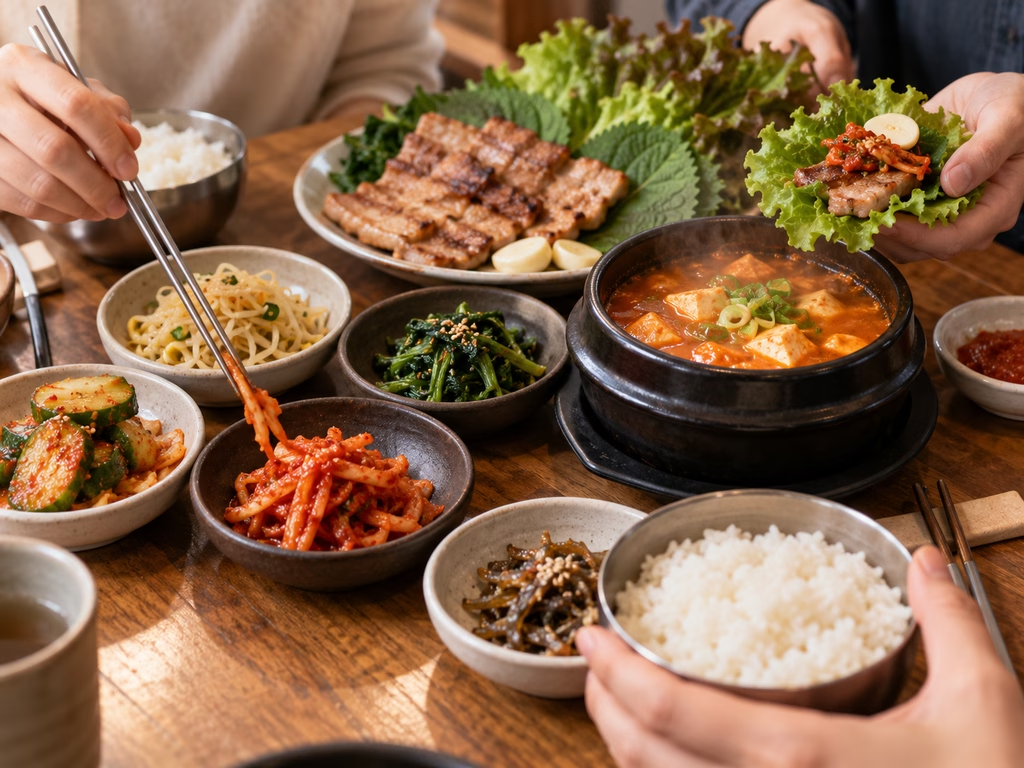
Can I keep asking for all the side dishes indefinitely?
There is an important part here as well.
There are many restaurants that provide extra basic kimchi, seasoned vegetables, and side dishes if you request more.
These days, there are many restaurants where you can get food yourself from a self-service bar without having to ask a staff member every time.
However, that does not mean that all the food on the table is unconditionally free to refill.
For example, dishes like steamed eggs or soybean paste stew that are served as a complimentary side dish at one restaurant may be on the separate menu at another.
Many meat restaurants offer basic refills of vegetables such as lettuce, perilla leaves, and garlic, but depending on the establishment, additional charges may apply.
In particular, special side dishes containing expensive ingredients or dishes close to the main course may not be eligible for free refills.
The simplest way is to check the menu or the self-service bar guide.
If you are not sure, you can ask a staff member.
This is one of the most useful expressions you can use while traveling in Korea.
Please give me more of this.
Or if you know the name of the food
Please give me more kimchi.
You can say that.
If there is a self-service bar, you can take it yourself.
Recently, it is not difficult to find self-service side dish bars in Korean restaurants.
It is especially common in restaurants frequented by many customers, such as barbecue restaurants, soup restaurants, shabu-shabu restaurants, and some Korean restaurants.
It is a system where you finish the side dishes you were initially given and then bring only the side dishes you want yourself.
From a foreigner's perspective, it can actually be more convenient because they do not have to keep asking staff for favors.
However, there are basic etiquette rules at self-service bars that are considered important even in Korea.
You only take as much as you can eat.
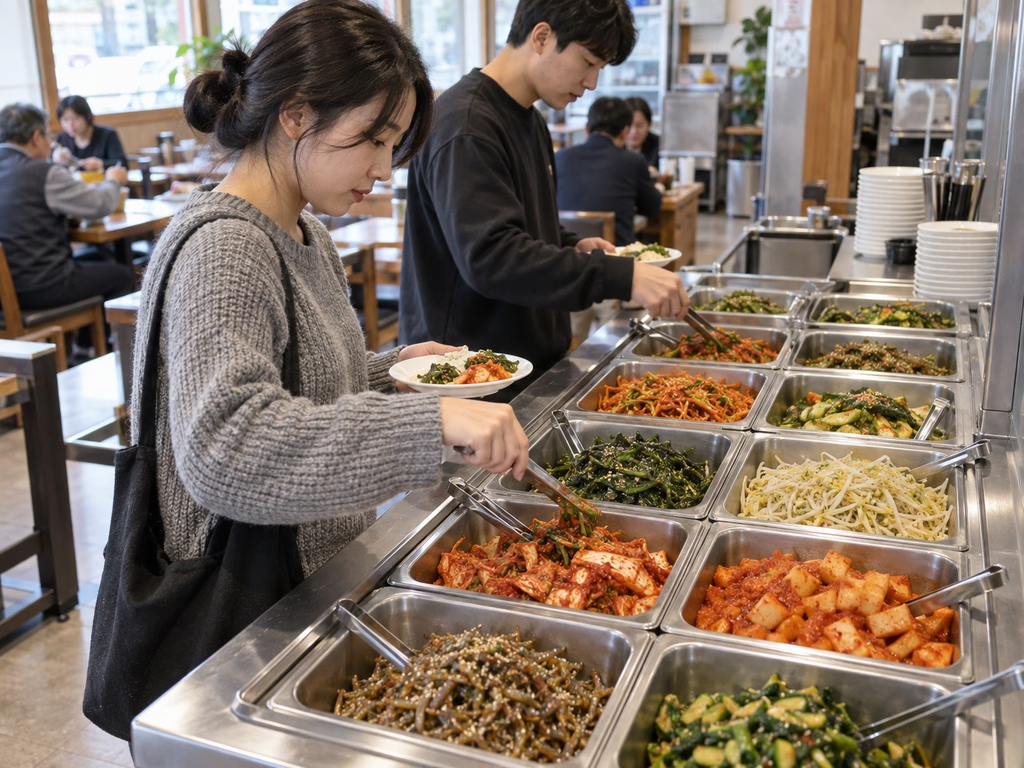
Just because refills are available doesn't mean you need to fill your plate all at once.
If you run out, you can bring more.
In fact, bringing too much and leaving some behind can be perceived as a negative attitude.
In my opinion, this is also the best way to properly enjoy Korean side dish culture.
At first, you taste a little bit of everything, and once you find a side dish you like, you take a little more of just that.
You don't have to pay for leaving side dishes, but...
In Korean restaurants, you generally do not have to pay extra for leaving the basic side dishes uneaten.
However, considering the problem of food waste, it is best to eat only as much as is necessary.
It is especially important to be careful with the food you take from the self-service side dish bar, as you have personally selected the amount you will eat.
If the advantage of Korean side dish culture is being able to taste a variety of foods in small portions, the best way to enjoy that advantage is not to put too much on your plate from the start.
You can try a bite or two, and if you like it, you can have more.
It is also less of a burden to try new foods while traveling.
This is because you can experience a new flavor with a small portion, rather than having to order a whole plate.
Side dishes become more important at a meat restaurant.
When you go to a samgyeopsal or galbi restaurant, Korean side dish culture becomes a bit more complex and interesting.
It looks like they only serve one type of meat, but the actual tables are quite busy.
Lettuce and perilla leaves are served, along with garlic and chili peppers.
There is ssamjang, and shredded green onions or seasoned green onions may also be served.
Side dishes such as kimchi, pickled onions, and pickled radishes are also served to help reduce the greasiness of the meat.
And everyone has a different way of eating.
Some people eat only meat dipped in salt.
Other people put meat, garlic, and ssamjang on top of lettuce and eat it in one bite.
Some people even add roasted kimchi.
Even though we ordered the same pork belly, one person's bite is completely different from another person's.
The Korea Tourism Organization also introduces Korean-style grilled meat not merely as a meat dish, but as a culinary culture that involves grilling the meat yourself, combining it with side dishes and wraps, and concluding with stew or fried rice.
This method may look complicated at first, but it is very fun once you try it a few times.
Eating ssam in one bite is the Korean style.
One thing foreigners surprisingly find difficult at barbecue restaurants is ssam.
If you put a lot of rice on top of the lettuce, add meat, and even garlic, chili peppers, and ssamjang, it becomes very large.
So you can try to eat it in several bites.
In Korea, it is common to eat ssam in one bite.
Of course, it is not a strict rule that you must do so.
You can eat comfortably.
However, if you want to try it the Korean way, I recommend making it in moderate sizes without putting too many ingredients in the lettuce or perilla leaves and eating it in one bite.
As the flavors of meat, vegetables, and ssamjang enter simultaneously, it becomes easier to understand why Koreans eat meat with side dishes.
Why do Koreans eat so many different foods at the same time?
One of the interesting features of Korean cuisine is the mixing and combining of various flavors.
Side dishes also play that role.
If the rice is a bit bland, it adds a strong flavor like kimchi.
If the meat is greasy, eat it with lettuce or pickled onions.
When eating spicy food, people sometimes eat relatively mild side dishes along with it.
Salty, spicy, sour, and mild flavors coexist in one meal.
Therefore, in Korean side dish culture, the fun of combining various side dishes is more important than finding the 'single most delicious side dish.'
When you first receive a Korean meal, it may look chaotic due to the large number of dishes.
However, as you eat little by little, you begin to see how each dish relates to the main course.
Personally, I believe this is precisely why Korean side dish culture deserves to be better known overseas.
This is because the Korean dining table is far more diverse than kimchi alone can explain the entirety of Korean cuisine.
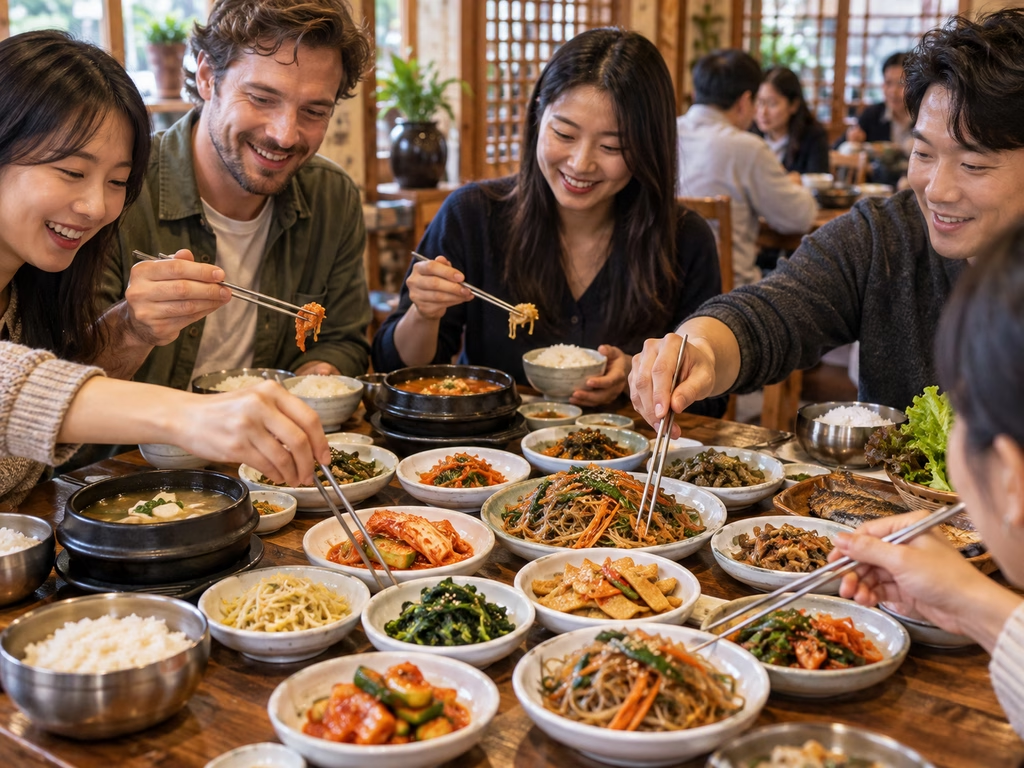
It is also interesting that the side dishes change depending on the season.
Korean side dishes are also closely related to the seasons.
This characteristic is clearly evident when looking at vegetable side dishes.
In spring, side dishes using spring greens appear, and in summer, there are many dishes utilizing seasonal vegetables such as cucumbers and eggplants.
In winter, foods with high shelf life, like kimchi, become more prominent.
While the distinction between seasons has weakened compared to the past due to advancements in modern food distribution, there are still many Korean restaurants that place importance on seasonal ingredients.
The materials used also vary slightly depending on the region.
Therefore, there is no need to assume that the Baekban you ate in Seoul has the same composition as the Baekban you ate in Jeolla or Gyeongsang provinces.
If you travel to various regions of Korea, comparing the differences in side dishes by region can make for a quite interesting trip.
Is a restaurant with many side dishes necessarily a better restaurant?
If there are many side dishes, it looks very fancy at first.
If there are more than 10 or 15 plates on the table, the photos turn out well.
However, having many side dishes does not necessarily mean that the restaurant is delicious.
There is a restaurant where even if only three side dishes are served, each one is truly delicious.
Conversely, there are places with many varieties that are rarely visited.
Koreans also do not evaluate a restaurant based solely on the number of side dishes.
It is more important whether the side dishes are fresh, well-seasoned, and pair well with the main dish.
The approach I would like to recommend to travelers is to experience side dish combinations that complement the main dish, rather than blindly seeking out restaurants that serve a lot of side dishes.
When you go to a traditional Korean restaurant, the table looks completely different.
If you want to experience Korean side dish culture more fully, there is also Hanjeongsik.
In Korean traditional restaurants, a relatively large number of side dishes and main courses are often served, or the table is filled to the brim.
Various dishes such as japchae, jeon, fish, meat, namul, kimchi, braised dishes, and stews may be served together.
From a tourist's perspective, it is a very fancy meal that is great for taking photos.
However, the average Korean does not eat like this every day.
It is also good to know this point.
Ordinary daily meals can be much simpler.
Hanjeongsik is a way to experience a variety of Korean dishes at once, while Baekban shows a Korean meal that is closer to everyday life.
Both showcase Korean side dish culture, but they have quite different vibes.
Why don't people give tips in Korea?
Along with side dish refills, here is a tip that foreigners often ask about.
In Korean restaurants, tipping is generally not given separately.
Even if the staff grills the meat for you or brings side dishes multiple times, you just need to pay the amount shown on the bill.
For travelers accustomed to tipping culture abroad, this part might actually feel awkward.
The Korea Tourism Organization also advises in its guide to Korean restaurants that tipping is generally not required.
It is common Korean restaurant culture not to charge a separate tip even if you request more basic side dishes or water.
Of course, situations that differ from regular restaurants, such as hotels or special service environments, need to be considered separately.
Running a restaurant becomes easier just by knowing the simple phrase, “Excuse me.”
There are useful expressions for using restaurants when traveling in Korea.
Here you go.
It is a commonly used phrase when calling employees.
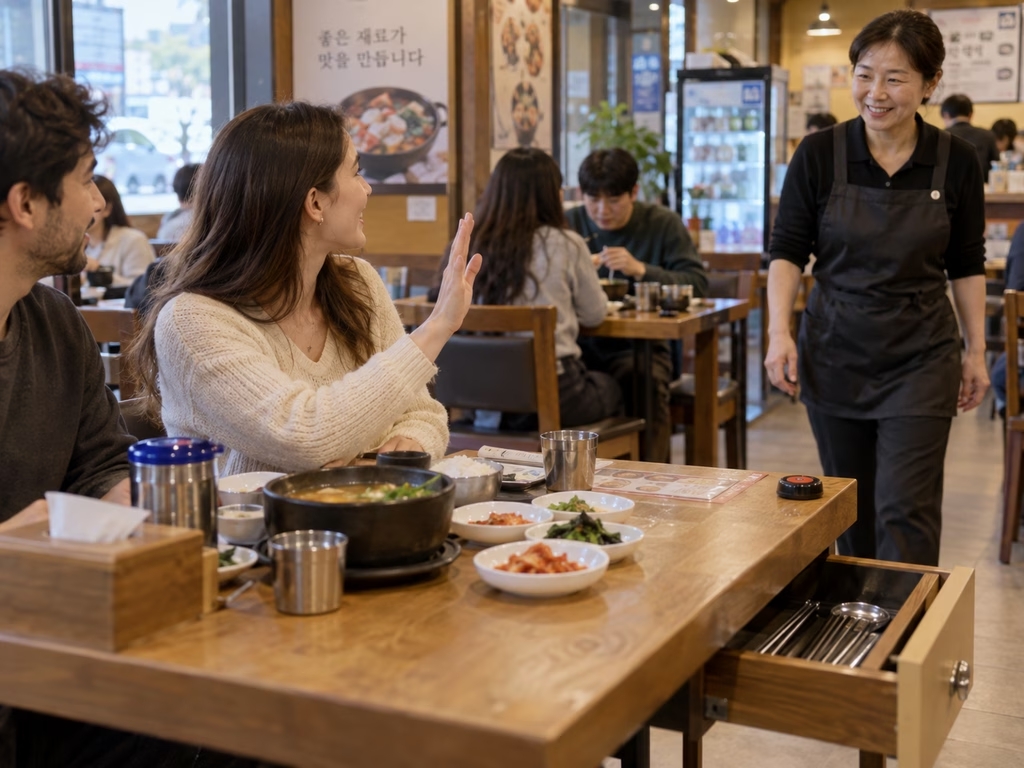
These days, many restaurants have call bells installed on the tables.
If you ring the bell, a staff member will come.
There are many restaurants where spoons and chopsticks are not placed directly on the table but are kept in a drawer next to the table.
Foreigners visiting a Korean restaurant for the first time sometimes assume there are no spoons and ask the staff for them.
However, you can first check if there is a small drawer next to or under the table.
Even these trivial things are part of everyday life for Koreans, but for travelers, they become Korean culture that they learn one by one.
It is okay not to eat the first side dish served.
You do not necessarily have to eat all the side dishes served on the table.
If it doesn't suit your taste, you don't have to eat it.
If you cannot handle spicy food well, you can try a small amount of kimchi or spicy seasoned side dishes, and if it is a dish you are seeing for the first time, you can ask a staff member.
In particular, if you have allergies or must avoid certain ingredients for religious reasons, it is not recommended to eat them immediately just because they "look like vegetable side dishes."
This is because animal-based ingredients such as anchovy sauce, shrimp paste, and broth can be added even to dishes where meat is not visible, such as namul or kimchi.
If you require a strict vegetarian, allergy-free, or Halal diet, it is safer to check the ingredients.
Another characteristic of Korean side dishes is that they are difficult to judge based on their appearance alone.
For foreigners, a small side dish becomes a new food.
Seasoned bean sprouts may not be a special dish to Koreans.
Stir-fried fish cakes are also common.
Stir-fried anchovies or braised potatoes might also be dishes you often ate at home.
However, for foreigners visiting Korea for the first time, these ordinary side dishes are all new Korean foods.
You might actually remember a small side dish whose name you didn't even know as the most delicious, rather than famous dishes like bulgogi or bibimbap.
The potatoes served alongside the meat were tastier than the meat itself.
“What is the name of this small cucumber side dish?”
This is the kind of curiosity that arises.
So, I believe that rather than just introducing famous K-foods at BuzzKorea, it is worth covering even these ordinary side dishes one by one in the future.
This is because for tourists, that is also a new Korea.
Side dish refills are closer to being part of the meal than a 'service'.
From a foreigner's perspective, seeing the side dishes being brought back can be perceived as very generous service.
Of course, it also means the generous hospitality of Korean restaurants.
However, looking a little deeper, since side dishes are fundamentally part of a meal, it is natural to view this as a culture where more is provided if needed.
This is because the meal does not end just because the kimchi runs out while eating.
In particular, the basic side dishes served with the main course provide a balanced meal.
So, Koreans do not feel that they are making a special request when asking for more side dishes.
It is simply asking for what you need during the meal.
In my view, this very point may be the biggest difference in how foreigners and Koreans accept Korean side dish culture.
Then why aren't side dishes priced on the menu?
If you look at Korean restaurant menus, you will often find prices for pork belly but not for kimchi.
There are no prices for bean sprouts or stir-fried fish cakes.
This is because basic side dishes are included in the ordered meal.
So, if you are visiting Korea for the first time, it might be fascinating to see food that isn't on the menu constantly appearing.
However, this is a natural structure in Korea.
Even if you do not select side dishes separately, the restaurant serves the basic side dishes prepared for the day.
For this reason, even at the same restaurant, some side dishes may change depending on the season or ingredient availability.
Rather, there are many cases where people enter a restaurant without knowing exactly what side dishes will be served today.
This little 'unpredictability' is also one of the fun aspects of Korean restaurants.
If you are going to a Korean restaurant for the first time, try eating it like this
If several side dishes are served, I recommend tasting a little bit of each first.
I check what I like the most.
Try eating it with rice, and also try combining it with a main dish.
If you are at a barbecue restaurant, it is a good idea to try a piece of meat on its own, then try it with kimchi, and finally try it wrapped in lettuce.
The taste of the same food changes.
If you find a side dish you like, you can request more.
If there is a self-service bar, please take only a little more than you can eat.
You don't need to try to conquer every side dish.
Even Koreans have different favorite side dishes depending on the person.
The essence of Korean side dish culture lies not in eating everything, but in finding the combination that suits you.
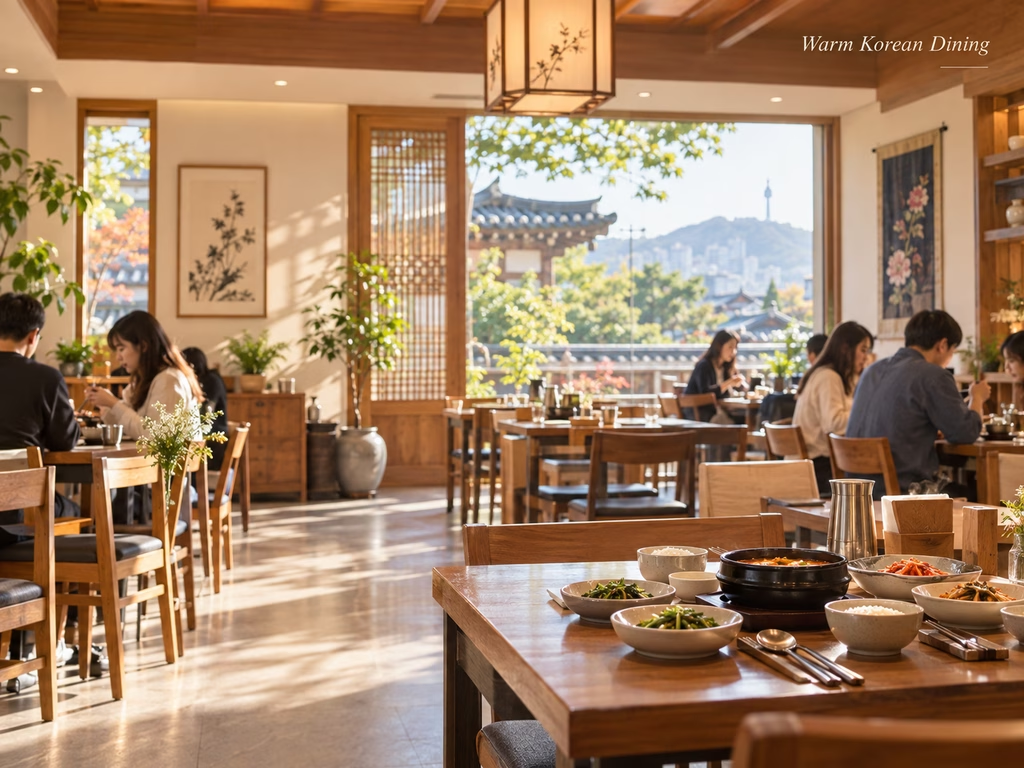
Why Small Plates at Korean Restaurants Become Travel Memories
At first, the numerous small plates placed on the table may seem unfamiliar.
However, after eating a few meals in Korea, you gradually get used to it.
As soon as I sit down at the restaurant, I become curious about what side dishes will be served.
You also realize that the kimchi you ate yesterday is a little different from today's kimchi.
At a barbecue restaurant, you also look for which side dish pairs best with the meat.
Someone who worried at the beginning of the trip, asking, "Do I have to pay for this?" upon seeing unordered side dishes, might naturally say, "Please give me a little more kimchi," a few days later.
I think these kinds of changes are what make travel fun.
Seeing just one more famous tourist attraction is not the only way to get to know a country.
Becoming familiar with the way a meal is eaten is also a process of coming to understand that country a little better.
Ultimately, the charm of Korean side dish culture is not just 'giving generous portions'.
To explain Korean side dish culture simply, it can be said like this.
In Korea, when you order a meal, they give you a lot of small side dishes, and if you ask for more, they give you more.
However, that explanation alone is a bit lacking.
Side dishes are not just a simple free service.
It is an important part of a Korean meal that connects the flavors between rice, soup, and the main dish, completing the meal.
You experience various flavors on one table by eating a piece of kimchi with rice, a bite of seasoned vegetables, and making wraps with meat.
Therefore, even when eating the same menu, the combination of dishes can vary from person to person.
I think the real charm of Korean side dish culture lies here.
It is more important to consider 'how many different flavors can be created within a single meal' rather than 'how many are given for free.'
If you are a foreign traveler, I recommend that you pay attention to the small dishes placed around the main menu at Korean restaurants, rather than just looking at the main course.
Because a small side dish whose name you didn't even know could become the most memorable food of a trip to Korea.