When talking about traveling to Korea and K-beauty, the first thing that comes to mind is cosmetics.
A trip where you buy sunscreen and serum at Olive Young, pick out trendy face masks in Korea, and try out new products firsthand at a beauty pop-up store in Seongsu-dong is no longer an unfamiliar experience.
However, recently, the number of travelers taking this a step further is increasing.
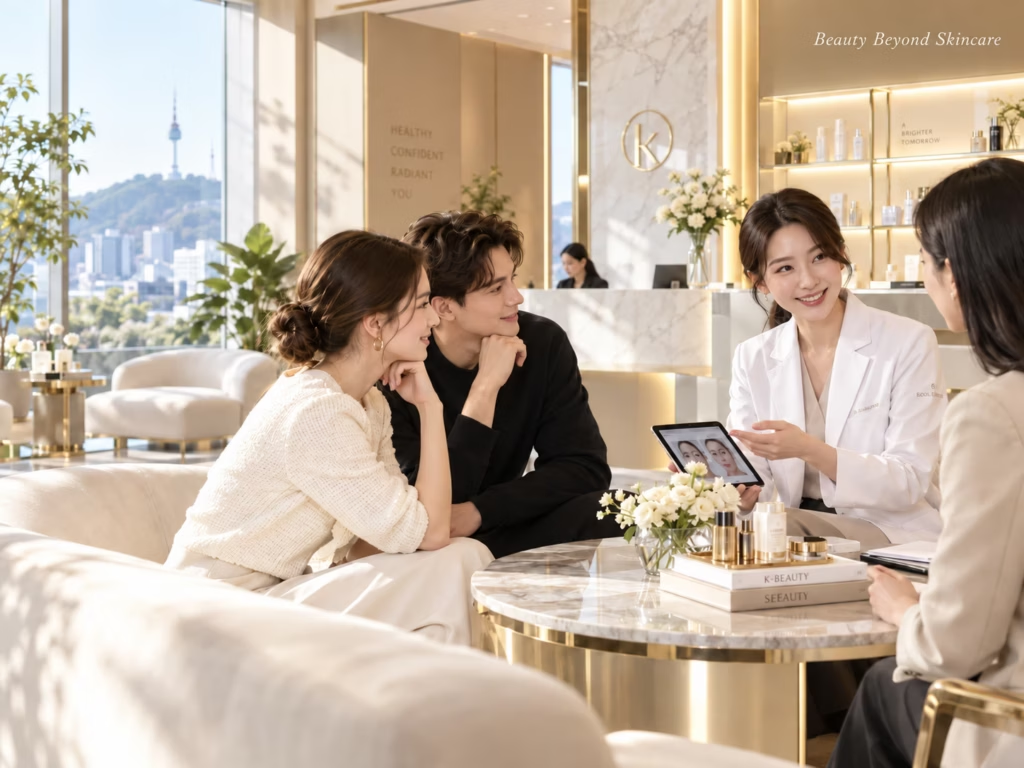
It is not just about shopping for cosmetics, but actually including a visit to a Korean dermatologist in the travel itinerary.
If you walk around tourist areas in Seoul such as Gangnam, Myeongdong, Hongdae, or Seongsu, you can easily find dermatology clinics that provide information in various languages, including English, Japanese, and Chinese.
Some travelers book their skincare schedules before arriving in Korea.
Some people combine general sightseeing and beauty itineraries into a single trip, such as visiting a dermatologist in the morning and enjoying cafes and shopping in the afternoon.
For Koreans, a dermatology clinic is one of the medical institutions they can find within their daily lives.
However, it may look a little different to those who first encountered Korean cosmetics and beauty trends overseas.
If Korean cosmetics are this famous, how do people in Korea take care of their skin?
This curiosity naturally leads to an interest in Korean dermatology.
Then, are foreigners actually visiting Korean dermatology clinics frequently?
And what makes Korean dermatology clinics look different to international travelers?
The fact that foreigners are visiting Korean dermatology clinics is also visible in the actual numbers.
Medical tourism in Korea has grown quite rapidly in recent years.
The number of foreign patients who visited Korea in 2024 was estimated at approximately 1.17 million.
Compared to about 610,000 in 2023, this is nearly double the level.
And the Seoul Metropolitan Government states in its 2026 medical tourism data that the number of foreign patients is expected to increase to approximately 1.76 million by 2025.
Among them, Seoul's share is overwhelming.
As of 2024, approximately 85% of all foreign patients received medical treatment in Seoul.
A particularly notable field is dermatology.
According to the statistics on foreign patients by medical specialty in Seoul in 2024, dermatology treatments accounted for the largest share with approximately 665,000 cases.
It is a scale much larger than approximately 130,000 plastic surgery cases.
While many people still think of plastic surgery first when they think of Korean medical tourism, looking at actual trends reveals that interest in skincare and relatively light cosmetic medical treatments has grown significantly.
I think this part is very important when BuzzKorea covers K-beauty.
This is because today's K-Beauty no longer means only cosmetics.
The reason why the next destination after Olive Young becomes a dermatology clinic
In the previous post, we looked at the reasons why foreigners visit Olive Young.
My initial goal is to see and purchase Korean cosmetics in person.
However, as you prepare for a trip to Korea in more depth, you naturally become interested in skincare methods as well.
I started looking into why Koreans consider sunscreen important, what ingredients are trending, and what kind of care they take depending on their skin condition.
This kind of information spreads quickly on social media as well.
As a result, it may go beyond simply applying cosmetics and lead to the desire to receive skin consultations or treatments in Korea firsthand.
I think this flow is very natural.
It is similar to liking K-POP and wanting to learn Korean.
As you come to like K-beauty products, you become curious about the Korean beauty culture itself, where the products are made and consumed.
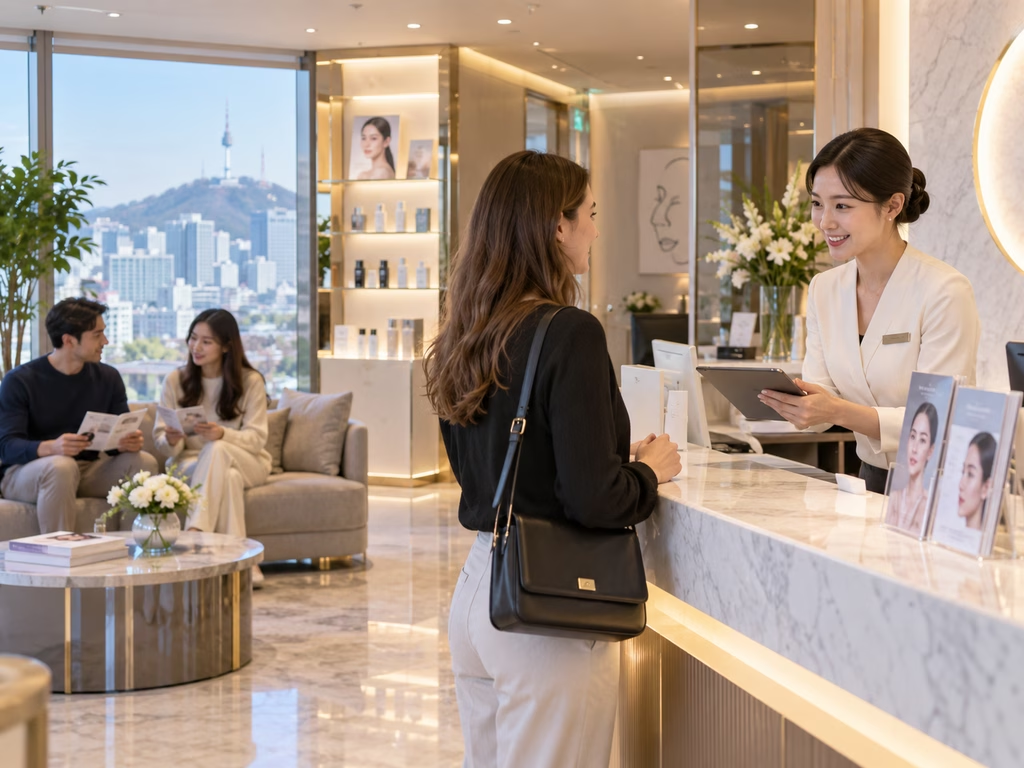
The first reason Korean dermatology looks special is that there are 'many options'.
If you walk through an area in Seoul where many dermatology-related medical institutions are concentrated, you can see cases where there are multiple dermatology hospitals and clinics in a single building.
In particular, the areas around Gangnam, Sinsa, Apgujeong, Myeongdong, and Hongdae have a high concentration of medical institutions that cater to foreigners.
From a traveler's perspective, having many options is an advantage, but at the same time, it becomes the most difficult part.
The fields covered are diverse, including laser treatment, pigmentation management, acne treatment, scar management, and skin elasticity management, and the equipment used and treatment methods vary from one medical institution to another.
Even treatments that appear to have the same name may differ in the actual equipment used, intensity, or treatment method.
Therefore, it is not a good idea to visit a Korean dermatology clinic based solely on hearing that "a certain procedure is famous."
It is important to first clearly determine what skin concerns you want to solve.
It is not necessarily only major procedures that foreigners seek out.
When you think of Korean medical tourism, it is easy to think of major plastic surgery first.
However, recently, the interests of foreigners visiting dermatology clinics have become much more diverse.
Some people seek consultation regarding skin tone or pigmentation, while others worry about acne or scars.
We also provide consultations on everyday skin concerns such as pores, skin texture, dryness, and elasticity.
In some cosmetic medical fields, treatments are performed using lasers, radio frequency, or ultrasound, and injection-based procedures are also available.
However, there is an important point here.
Just because the same procedure name is trending on social media does not mean it is a necessary procedure for everyone.
Suitability may vary depending on skin condition, age, presence of skin diseases, medications being taken, allergies, etc.
Therefore, rather than choosing a procedure name that is popular on the internet first, it is essential to make a decision after consulting with medical professionals.
Why 'One-Day Skin Care' Appeals to Travelers
Foreign travelers have a limited time to stay in Korea.
I usually stay for a few days to a week and plan to cover sightseeing, shopping, food, and beauty activities.
For this reason, it is easy to become interested in medical institutions where everything from consultation to treatment can be done in a relatively short period of time.
This is because you can visit by utilizing one or two hours in the morning during your travel itinerary.
In fact, the medical and wellness sector is significantly increasing its share in Seoul's tourism spending.
Looking at card spending by foreign tourists in Seoul during the first half of 2026, the medical and wellness sector accounted for more than 24% of total spending.
Medical tourism spending also increased by more than 60% compared to the same period last year.
These figures show that dermatology visits are no longer just for a select few medical tourists, but are growing into a significant sector of tourism consumption in Seoul.
However, 'same-day procedure available' and 'light' are not the same thing.
This is the part travelers need to be most careful about.
Just because the procedure time is short does not mean there are no risks or a recovery period.
The skin may become red or swollen, and bruising or irritation may occur.
Depending on the type of procedure, you may need to avoid sun exposure or require special care for a certain period.
Therefore, it may not be appropriate to schedule it immediately after important photo shoots, outdoor activities, swimming, or sauna sessions.
For example, a schedule where you get a new procedure on your entire face on the last day of a trip to Korea and immediately board a long-haul flight can be inconvenient for some people.
If I were visiting a dermatologist while traveling, I would check "what restrictions there are on my subsequent schedule" before focusing on the procedure itself.
This is because the journey does not end the moment the procedure is performed.
Even if the price looks cheap, you shouldn't make a decision based solely on the number of ads.
If you search for Korean dermatology clinics, you can also see advertisements that emphasize significantly low prices.
Advertisements stating that certain procedures can be received for tens of thousands of won also catch the eye.
However, you should not assume that the displayed price is the same as the actual final payment amount.
The advertised price may be for the most basic option, and the price may vary depending on the treatment area, dosage used, type of equipment, whether anesthesia is used, additional care, etc.
You also need to check if separate interpretation or service fees apply to foreigners.
Therefore, it is recommended to check at least the following before making a reservation.
It includes the type of procedure, the number of sessions, the target area, whether there are additional costs, whether VAT is included, and whether aftercare is included.
It is difficult to recommend choosing a hospital based on just one line of the price list.
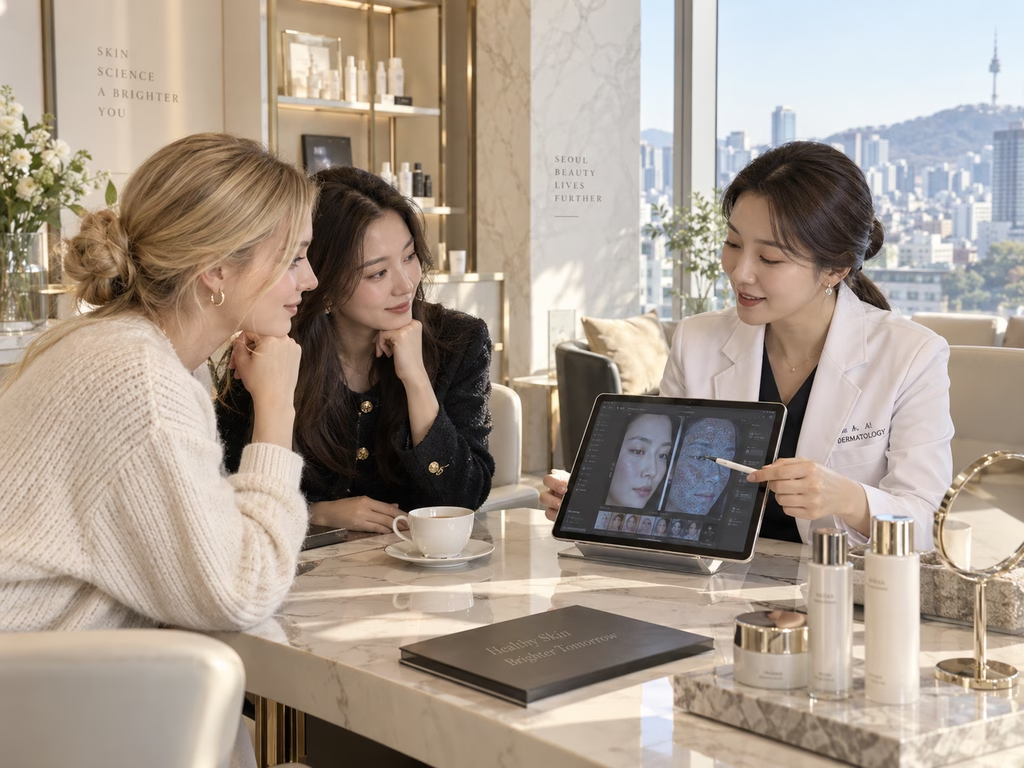
You should not judge medical staff based solely on the name 'Dermatology'.
This is a point that Korean travelers should particularly check.
Even if the names of medical institutions or advertising slogans look similar, the medical staff's specialties and experience may differ.
It is recommended to check which doctor is actually in charge of the consultation and procedure.
You must be especially cautious if there is a medical issue rather than a simple cosmetic one, such as a skin disease.
When choosing a dermatologist in Korea, it is safer to check the medical staff's information, hospital registration status, the consultation process, and whether the explanation of side effects is sufficient, rather than looking only at the number of social media followers or reviews.
Medical institutions that attract foreign patients are subject to the relevant registration system, and there are also medical institutions that receive foreign patients within the official medical tourism system.
I believe that travelers should at least verify whether a medical institution is officially registered and check the actual medical staff in charge before visiting.
Korean dermatology clinics and general skin care shops are different.
Foreigners visiting Korea for the first time may also frequently get confused about this part.
In Korea, in addition to dermatology clinics, there are various beauty facilities such as aesthetics, skin care salons, and spas.
It may appear similar in that it has a sophisticated appearance and provides skin-related services.
However, dermatology clinics that perform medical procedures and general skin care shops are not the same place.
Procedures requiring medical intervention, such as lasers or injections, must be performed by medical professionals at a medical institution.
On the other hand, aesthetics focuses on non-medical skin care such as massage, cleansing, and face masks.
From a traveler's perspective, it is necessary to first distinguish whether what they want is simple rest and care, or medical diagnosis and procedures.
If you understand this difference, you can significantly reduce unnecessary confusion.
The increase in foreign language counseling has also lowered the entry barrier.
In the past, it was quite difficult to visit a Korean hospital from overseas.
This is because I had to resolve language issues, from making reservations to explaining medical terms.
Recently, Seoul has been continuously expanding medical interpretation and counseling services for foreigners.
Among medical institutions with many foreign patients, there are some that provide consultations in English, Japanese, Chinese, and other languages.
The Seoul Metropolitan Government is pursuing a plan to expand the number of medical tourism interpreter coordinators from the current 108 to 1,000 by 2026.
We are also strengthening our integrated medical tourism platform that connects hospitals, visas, accommodation, and tourism.
As such infrastructure expands, the barriers to foreigners accessing Korean medical institutions are lowered.
However, the fact that interpretation is possible and that accurate communication with the medical staff was possible are separate issues.
It is important to agree after understanding not only the effects of the procedure but also the side effects, recovery period, and actions to avoid.
Before the procedure, let's ask about 'what not to do' first, rather than the desired results.
When you consult a dermatologist, they usually start by asking about the desired effects.
How much will it get better?
How many times do I need to receive it?
Of course, it is an important question.
However, if you are a traveler, there is something you need to check before that.
It involves asking when you can wash your face after the procedure, when you can start wearing makeup, whether exposure to ultraviolet rays is okay, whether you should avoid saunas or exercise, and how long swelling or redness may last.
You need this information to adjust the remaining travel schedule.
Especially when traveling in Seoul, there are many instances where you walk a lot and engage in outdoor activities in a single day.
The sunlight is strong in the summer, and the skin can become dry in the winter.
Since this environment can have an impact depending on the type of procedure, it is best to make a decision while also considering your travel schedule.
It might be more convenient to include it in the middle of the itinerary rather than on the first day of the trip.
Let's think of a hypothetical travel itinerary.
Let's assume there is a traveler visiting Korea for 5 nights and 6 days.
On the first day, your skin condition may be different from usual due to the long flight.
Your face may swell or become sensitive due to lack of sleep or the dry cabin environment.
In this condition, it is not always best to receive the planned procedure as soon as you arrive.
Conversely, right before departure, there is insufficient time to receive counseling again in Korea even if an unexpected reaction occurs.
Therefore, if your schedule permits, it might be more relaxed to receive counseling after arriving in Korea and settling in for about a day, while also leaving some time before your departure.
Of course, since it varies completely depending on the type of procedure, consulting with medical staff is also necessary first.
Just because something is popular in Korea doesn't mean it's necessarily right for me.
If you look at social media, the names of procedures trending in Korea spread rapidly.
The names of specific lasers, lifting procedures, or skin injections are sometimes shared like travel preparation lists.
However, you need to be careful not to approach medical procedures like a shopping list.
If you buy the wrong sunscreen at Olive Young, you may have to stop using it.
However, medical procedures are difficult to reverse or can cause side effects.
A procedure that worked well for my friend might not be necessary for me.
It is difficult to recommend receiving multiple procedures at once just because they are popular in Korea.
The purpose of a trip to Korea for dermatology should not be to 'try everything famous in Korea,' but to safely receive treatment tailored to your skin condition.
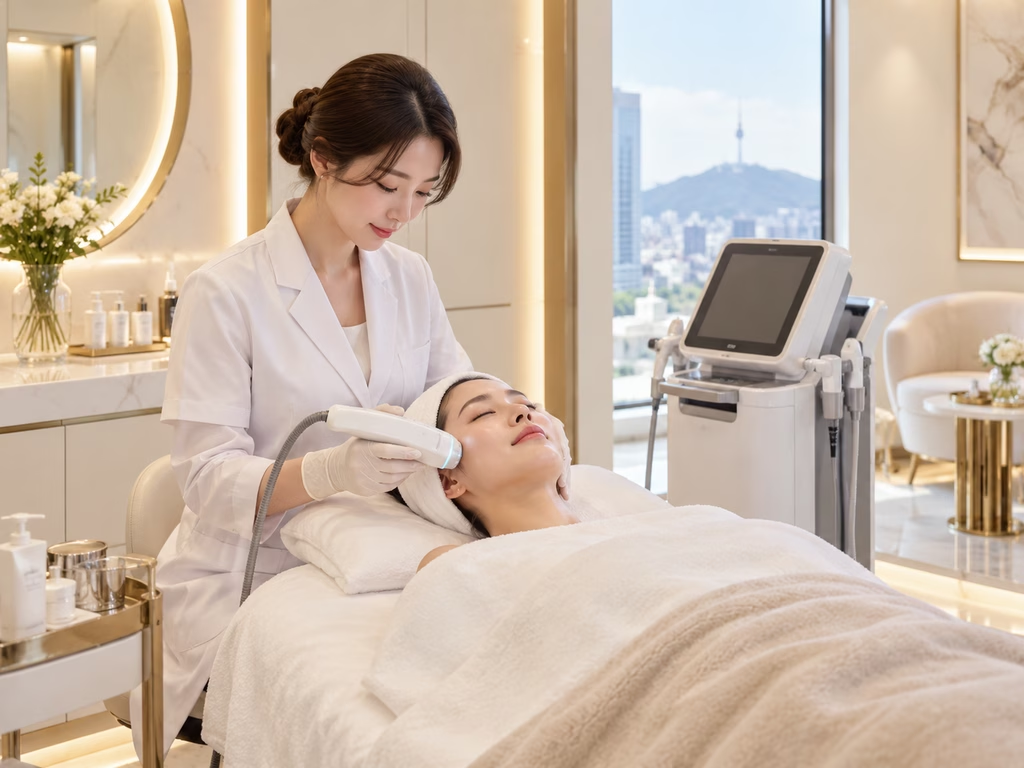
Foreign travelers can also check for tax refunds.
Foreign tourists who receive certain dermatological and plastic surgery medical services for cosmetic purposes in Korea may receive a VAT refund depending on the conditions.
According to current guidelines from the Korea Tourism Organization, eligible cosmetic medical services must be received at medical institutions registered to attract foreign patients that are enrolled in the tax refund system.
Generally, the standard is medical expenses of 30,000 won or more, and passport verification is required.
There are also conditions regarding the period of stay in Korea and the period of departure.
However, not all dermatology clinics and procedures are eligible for reimbursement.
It is better to check in advance when making an appointment whether the hospital offers VAT refunds and if the procedure you are receiving is eligible, rather than checking belatedly after paying the bill.
Operating fees and other charges may be deducted from the refund amount.
Why You Shouldn't Trust Star Ratings Alone When Reading Hospital Reviews
Travelers rely heavily on online reviews when choosing a hospital.
It is only natural, since you have to choose a hospital in an unfamiliar country.
However, medical institution reviews should not be viewed in the same way as restaurant reviews.
Reviews stating that the price is low or the staff are friendly are important, but they are insufficient to judge the appropriateness of the medical procedure.
Even with the same procedure, the patient's condition is different, and the results vary from person to person.
In particular, before and after photos on social media can look significantly different depending on lighting, angle, makeup, and the time of shooting.
Therefore, it is recommended to use reviews merely as a reference to check the hospital's atmosphere or level of foreign language support, and to make medical decisions through consultation.
There is no need to get too many procedures done in one day.
Foreign tourists with limited time may want to receive various treatments at once while they are in Korea.
However, the skin does not move like a travel itinerary.
How the skin reacts when various procedures such as lasers, injections, and lifting are combined simultaneously varies from person to person.
It is difficult to know how you will react, especially if it is your first time receiving the procedure.
If it were me, I would not recommend the approach that "the more you receive, the better" to a traveler visiting a Korean dermatology clinic for the first time.
Rather, I believe that receiving sufficient consultation and selecting only what is absolutely necessary is a way to enjoy your trip more comfortably.
On days you visit the dermatologist, it is better to think about rest rather than shopping.
Traveling in Korea involves more walking than you might expect.
It is also common to walk more than 10,000 steps a day.
If you wander around Seongsu, Myeongdong, Hongdae, and Gangnam, the day will fly by.
However, if you schedule a packed outdoor itinerary up until the day you receive treatment at the dermatology clinic, you may find it more tiring than expected.
This is especially true if your skin is sensitive after the procedure.
So, if you include a beauty appointment, it is a good idea to keep the day light by visiting a nearby cafe or doing some indoor shopping.
If experiencing Korean dermatology itself is one of the purposes of your trip, there is no reason to cram all the tourist attractions into one day.
In which areas of Seoul can you see them often?
There are dermatology clinics for foreigners located in various areas of Seoul.
The most widely known areas are Gangnam and the Apgujeong and Sinsa areas.
There are many medical institutions clustered together, and dermatology and plastic surgery clinics can also be easily found.
Myeongdong is also easily accessible to foreign tourists, so it is easy to find medical institutions that provide multilingual guidance.
You can also find hospitals targeting relatively young travelers around Hongdae and Sinchon.
As the K-beauty experience grows in the Seongsu area as well, interest in skincare and beauty-related spaces is increasing.
However, it is difficult to say which neighborhood is the best.
This is because, when choosing a medical institution, the attending medical staff and the specific treatment needed are more important than the location.
There is not just one real reason why Korean dermatology is popular.
There are cases where foreigners explain the reason for visiting Korean dermatology clinics simply as being “cheap.”
Some procedures may be relatively more accessible than in other countries.
However, it is difficult to explain the recent rapid increase with that alone.
It is more natural to view this as a result of the combined effects of high interest in K-beauty, a thriving skincare culture, diverse options, expanded foreign language consultations, and Seoul's environment where travel and shopping can be done at the same time.
In fact, shopping and medical and wellness account for a large portion of foreign spending in Seoul tourism consumption in 2026.
During a trip to Korea, buying cosmetics and receiving skin care are not completely separate activities, but are being connected as a single K-beauty experience.

This is how I view dermatology tourism in Korea.
Personally, I think the phenomenon of growing dermatology tourism in Korea is quite interesting.
This is because the self-care culture familiar to Koreans has become a form of travel content for overseas tourists.
However, you must clearly distinguish between shopping at Olive Young, cafe tours, and visiting a dermatologist.
Dermatology is a medical institution.
With shopping, if you don't like an item, you simply don't buy it, but medical procedures directly affect the body.
Therefore, I believe it is important to establish a travel culture where people receive accurate consultation and sufficient explanations first, rather than the approach of "since I'm in Korea, let's try something famous."
Choosing safe medical staff is a priority over low prices.
It is more important to choose what you need rather than receiving a lot.
Travel to Korea is now expanding from 'sightseeing travel' to 'self-care travel'.
The appearance of traveling in Seoul is constantly changing.
In the past, a typical itinerary involved visiting the palace, shopping in Myeongdong, and eating Korean food.
New experiences are continuously being added here.
You can get a personal color analysis in Seongsu, buy K-beauty products at Olive Young, receive consultations at dermatology clinics, and visit hair salons or nail salons.
Travel has evolved from being centered on tourist attractions to include the experience of grooming and taking care of oneself as part of the travel content.
I believe this change is one of the important aspects of Korea that BuzzKorea will introduce in the future.
This is because Korea is a country with ancient culture, such as Gyeongbokgung Palace and Hanok, but at the same time, it is a country where beauty, fashion, healthcare, and lifestyles are changing rapidly.
Ultimately, why do foreigners come all the way to Seoul for skin care?
There is not just one correct answer.
Some people start because they like Korean cosmetics.
Some people come across Korean skincare culture on social media and become curious.
Some people are attracted to the fact that they can receive counseling relatively comfortably while traveling.
And some people want to experience travel, shopping, and beauty all at once.
In Seoul, all these elements are gathered within a very close proximity.
You can get a consultation at a dermatology clinic in the morning, eat Korean food for lunch, shop in Seongsu or Myeongdong in the afternoon, and go to the Han River in the evening.
It seems that this environment makes foreigners view Korean dermatology clinics not merely as medical institutions, but as another form of K-beauty content to experience while traveling.
However, there are also things that must be remembered.
A dermatology clinic is a medical institution, not a tourist attraction.
The most important thing is not trends or price, but safe treatment tailored to your skin condition.
As long as you follow the basics, experiencing Korean skincare culture firsthand can be a quite interesting way to understand present-day Korea.